Clicks Do Not Always Equal Customers
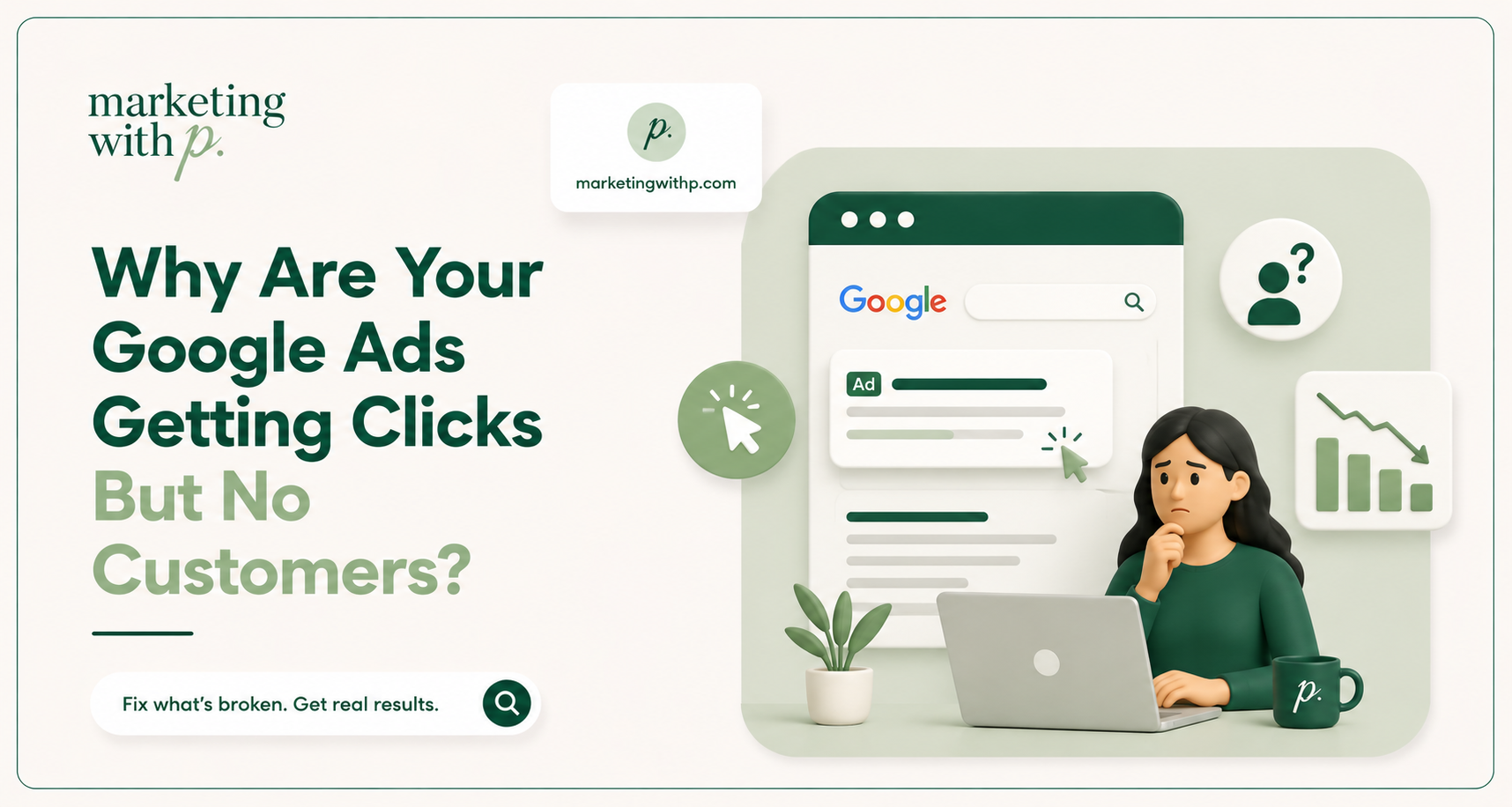
One of the biggest misconceptions in digital marketing is believing that traffic automatically means growth.
It does not.
A campaign can generate:
- thousands of impressions
- hundreds of clicks
- low CPCs
- high CTRs
…and still produce zero revenue.
Why?
Because Google Ads only gets people to your website. Your website and offer are what convert them into leads or customers.
A lot of small businesses optimize for:
- clicks
- traffic
- impressions
Instead of:
- qualified leads
- booked calls
- form submissions
- revenue
That is where campaigns begin to fail.
Are You Targeting the Wrong Keywords?
Not All Keywords Have Buying Intent
Many businesses accidentally target informational keywords instead of commercial-intent keywords.
For example:
Weak Intent Keywords
- “best roofing materials”
- “how long does SEO take”
- “what is physiotherapy”
These searches are often research-based.
Strong Intent Keywords
- “roofing company near me”
- “SEO consultant Toronto”
- “book physiotherapy appointment”
These users are much closer to becoming customers.
If your campaign is getting traffic but no conversions, your keywords may be attracting people who are not ready to buy.
Broad Match Can Burn Budget Fast
Google’s automation has improved significantly, but broad match keywords can still bring irrelevant clicks if campaigns are poorly structured.
For example:
A clinic targeting:
“dental implants”
could accidentally show up for:
- dental implant school
- free dental implants
- DIY dental kits
This creates wasted spend without generating qualified leads.
What To Do Instead
- Use phrase and exact match strategically
- Add negative keywords regularly
- Review search terms weekly
- Prioritize high-intent keywords
Is Your Landing Page Killing Conversions?
Most Google Ads Problems Are Actually Website Problems
A user clicking your ad does not mean they trust your business yet.
When someone lands on your page, they subconsciously ask:
- Am I in the right place?
- Can this business solve my problem?
- Do I trust them?
- Is this worth my time?
If your landing page fails to answer those questions quickly, people leave.
Common Landing Page Mistakes
Weak Headlines
Generic headlines like:
“Welcome to Our Website”
do not convert.
Your headline should clearly communicate:
- what you do
- who you help
- what outcome you provide
Example:
“Google Ads Management for Small Businesses That Need More Qualified Leads”
Too Many Distractions
Many small business websites:
- have too many menu options
- cluttered layouts
- multiple CTAs
- walls of text
A landing page should guide users toward ONE action.
Usually:
- booking a call
- submitting a form
- requesting a quote
Slow Website Speed
A slow website can destroy conversion rates.
Even a few extra seconds of load time can increase bounce rates dramatically.
This becomes even more important on mobile devices, where most local searches happen.
Are Your Ads Attracting Low-Intent Traffic?
Clickbait Ads Create Bad Leads
Sometimes ads get clicks because the messaging is too broad or misleading.
For example:
Weak Ad
“Best Marketing Services”
This attracts everyone and no one.
Strong Ad
“Lead Generation Google Ads for Local Clinics”
Specificity filters better traffic.
The more aligned your ad is with your actual offer, the higher your conversion quality becomes.
Is Your Offer Strong Enough?
Even perfectly optimized campaigns struggle if the offer itself is weak.
Businesses often ask:
“Why are my ads not converting?”
when the real question should be:
“Why should someone choose us?”
Your offer needs:
- clarity
- differentiation
- trust
- urgency
- proof
What Makes a Strong Offer?
Examples:
- Free consultation
- Free audit
- Transparent pricing
- Case studies
- Guarantees
- Fast turnaround
- Specialized expertise
People rarely convert because of “marketing.”
They convert because they believe you can solve their problem.
Common Google Ads Mistakes Small Businesses Make
Sending Traffic to the Homepage
This is one of the most common mistakes.
Homepages are often designed for general browsing — not conversions.
Google Ads traffic should usually go to:
- dedicated landing pages
- service-specific pages
- conversion-focused experiences
Ignoring Conversion Tracking
If conversion tracking is broken:
- Google cannot optimize properly
- campaigns learn incorrectly
- budget allocation becomes inefficient
Many businesses optimize for clicks because they are not tracking:
- leads
- booked calls
- purchases
- revenue
Optimizing Too Early
Google Ads needs data.
Many businesses:
- panic too early
- constantly edit campaigns
- reset learning phases
- make decisions from small sample sizes
Optimization should come from trends — not emotions.
How To Improve Conversion Rates From Google Ads
Improve Message Match
Your:
- keyword
- ad copy
- landing page headline
should all align closely.
Example:
Keyword
“emergency plumber Toronto”
Ad
“24/7 Emergency Plumbing Services in Toronto”
Landing Page
“Need an Emergency Plumber in Toronto? We Respond Fast.”
Consistency improves trust and conversion rates.
Add Trust Signals
Trust signals can dramatically improve lead quality.
Examples:
- testimonials
- reviews
- certifications
- before-and-after results
- client logos
- case studies
People trust businesses that look proven.
Focus on Intent, Not Traffic
More traffic is not always better.
100 qualified visitors are worth more than:
- 10,000 random clicks
- vanity traffic
- low-intent visitors
The goal is not to “go viral.”
The goal is:
profitable lead generation.
How AI and AEO Are Changing Google Ads
Search behavior is changing rapidly because of AI-powered search experiences like:
- ChatGPT
- Google AI Overviews
- Perplexity
Users are becoming more conversational with searches.
Instead of typing:
“SEO Toronto”
people now search:
“Why is my business not getting leads from Google?”
This means businesses need:
- conversational content
- strong FAQ sections
- clearer service positioning
- authoritative educational content
This is where Answer Engine Optimization (AEO) becomes important.
Businesses that clearly answer questions are more likely to appear in:
- AI search results
- AI summaries
- featured snippets
- conversational search experiences
Frequently Asked Questions
Why do my Google Ads get clicks but no sales?
This usually happens because of poor targeting, weak landing pages, low buying-intent traffic, or unclear offers. Clicks alone do not guarantee conversions.
What is a good conversion rate for Google Ads?
Conversion rates vary by industry, but many local service businesses aim for 5–15% depending on traffic quality, landing page quality, and offer strength.
Should I send Google Ads traffic to my homepage?
In most cases, no. Dedicated landing pages generally convert better because they are designed around a single offer and CTA.
Why are my Google Ads expensive?
High CPCs can come from:
- competitive industries
- poor Quality Scores
- weak landing pages
- low relevance
- broad targeting
Improving targeting and conversion rates often lowers acquisition costs over time.
Conclusion
If your Google Ads are getting clicks but no customers, the problem is usually deeper than the ads themselves.
The most common causes include:
- targeting the wrong keywords
- weak landing pages
- low-intent traffic
- unclear offers
- broken tracking
- poor message alignment
Successful Google Ads campaigns are built around:
- user intent
- trust
- conversion-focused experiences
- strong messaging
- accurate tracking
Traffic alone does not grow businesses.
Conversions do.
Growth Doesn’t Come From Random Marketing Tactics
The best marketing strategies are built
around your business stage, goals,
audience, & what actually drives revenue.
That’s where P comes in.

.svg)