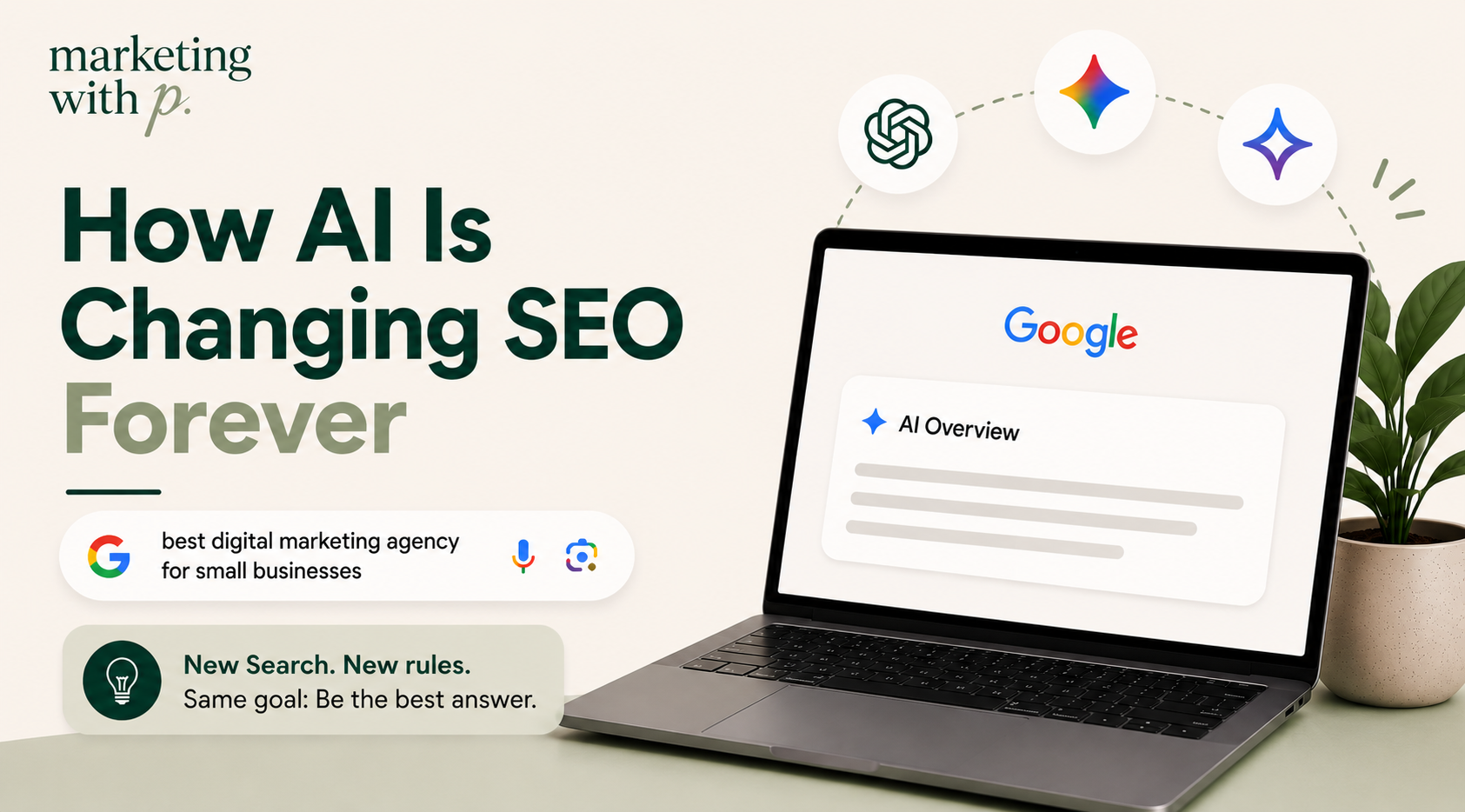
Artificial intelligence is changing the way people search online.
Instead of scrolling through pages of Google results, users are increasingly getting direct answers from AI-powered tools like Google AI Overviews, ChatGPT, Gemini, and Perplexity.
For businesses, this changes one important question.
It's no longer just:
"How do I rank on Google?"
It's also:
"How do I become the source AI chooses to reference?"
The good news?
The fundamentals of good SEO still matter.
They're just evolving.
Here's what every business should know.
Search Is Becoming More Conversational
People aren't searching the way they used to.
Instead of typing:
Best coffee shop Toronto
They're asking:
"What's the best coffee shop near Union Station with good Wi-Fi?"
AI understands natural language, context, and follow-up questions.
That means your content needs to answer real questions instead of simply targeting keywords.
Rankings Aren't the Only Goal Anymore
For years, businesses focused on reaching the first page of Google.
Today, many users never click a website at all.
AI often provides a complete answer directly in the search results.
If your content is cited within that answer, you've still gained visibility—even without a click.
This shift is changing how businesses measure SEO success.
Helpful Content Wins
AI is designed to provide useful, accurate information.
That means content written purely to rank for keywords is becoming less effective.
Instead, focus on creating content that genuinely helps your audience.
Think about the questions customers ask every day.
Those questions should become your blog posts, FAQs, guides, and service pages.
Trust Matters More Than Ever
AI doesn't just look at your website.
It considers signals from across the web.
Things like:
- Reviews
- Mentions from trusted websites
- Industry publications
- Business listings
- Customer testimonials
- Brand reputation
The stronger your online presence, the more likely AI is to view your business as a trustworthy source.
Structure Your Content Clearly
AI prefers content that's easy to understand.
Simple improvements include:
- Clear headings
- Short paragraphs
- Bullet points
- FAQ sections
- Descriptive page titles
- Well-organised service pages
Good structure helps both people and AI understand your content.
Expertise Still Matters
Publishing dozens of average articles won't outperform a handful of genuinely useful ones.
Businesses should focus on demonstrating real experience.
Share:
- Case studies
- Original insights
- Customer success stories
- Industry knowledge
- Practical advice
Unique expertise is becoming a competitive advantage in AI-powered search.
Don't Forget Local SEO
If you're a local business, AI still needs location signals.
Make sure your website clearly includes:
- Your city and service areas
- Google Business Profile
- Contact information
- Local service pages
- Customer reviews
Local SEO remains one of the most effective ways to attract nearby customers.
SEO Isn't Dead—It's Growing
Every time a major search update happens, people claim SEO is finished.
The same happened with mobile search.
Voice search.
Featured snippets.
And now AI.
The reality is that SEO isn't disappearing.
It's expanding.
Businesses that continue creating helpful content, building authority, and improving user experience will continue to benefit, regardless of how search evolves.
Final Thoughts
AI-powered search is changing how people discover businesses, but it isn't replacing the need for great websites or valuable content.
The businesses that succeed won't be the ones chasing every new trend.
They'll be the ones consistently publishing helpful content, building trust, answering customer questions, and demonstrating genuine expertise.
Because whether a customer finds you through Google Search, an AI Overview, or ChatGPT, one thing remains the same:
The best answer usually wins.
Growth Doesn’t Come From Random Marketing Tactics
The best marketing strategies are built
around your business stage, goals,
audience, & what actually drives revenue.
That’s where P comes in.

.svg)